
Real vs. Artificial Christmas Tree: How to Choose and Care
Fresh Fraser or balsam fir, or an artificial tree you reuse for years? How to compare them, measure your space, and set up, water, light and store a tree safely.
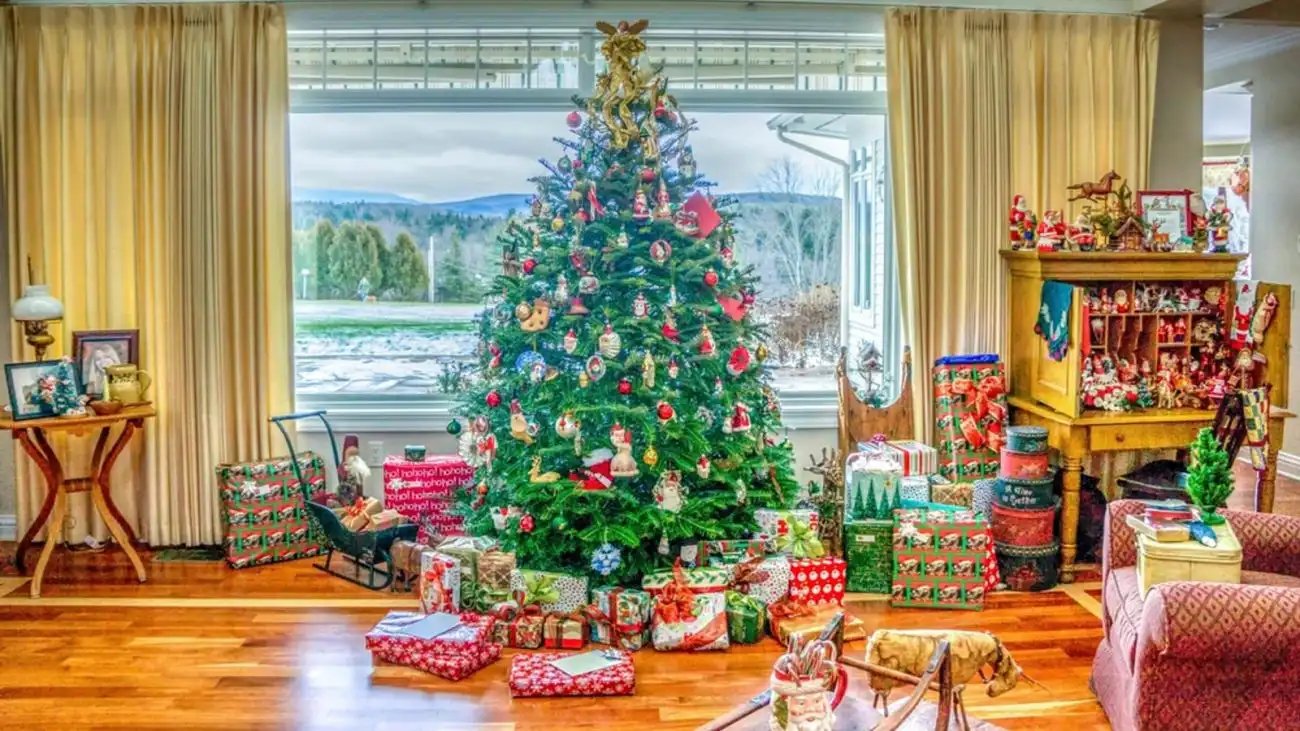
Quick answer
- Pick a fresh tree, such as a Fraser or balsam fir, if you want real needles and natural scent. Pick an artificial tree if you’d rather reuse one for years with no daily watering.
- Measure first: leave room under the ceiling for the stand and topper, and check how wide the tree will be.
- A fresh tree needs a fresh cut, a stand that holds plenty of water, a top-up every day and at least 3 feet of space from heat sources.
- An artificial tree needs fluffing, a lights check each year and compressed storage in a cool, dry place.
Fresh or artificial: how they compare
There’s no single right answer. Some households love the ritual of a real tree; others want to pull one out of the closet and decorate in an afternoon. Here’s how they compare.
| Factor | Fresh-cut tree | Artificial tree |
|---|---|---|
| Look and scent | Real needles and natural fragrance | Realism varies by tree; no scent |
| Daily care | Water every day; some needle drop | Little beyond switching lights on and off |
| Setup | Fresh cut plus a stand that holds water | Assemble sections and fluff the branches |
| Lights | You string your own | Many come pre-lit |
| Fire safety | A dry tree can burn very hot and fast, so keep it watered and away from heat | Look for a fire-resistant label; still keep it away from heat |
| After the holidays | Take it down and recycle it locally | Pack it away for next year |
| Materials | Farm-grown and biodegradable | Plastic and metal; not biodegradable, but reused for years |
Fraser fir or balsam fir?
If you go fresh, these two firs are longtime holiday favorites, and both are available as fresh-cut trees in our shop.
- Fraser fir grows wild only above about 4,500 feet in the southern Appalachian Mountains. It has dark blue-green needles, strong branches that turn slightly upward and a pleasant scent, and it’s known for good needle retention. Those sturdy branches are a plus if you hang a lot of ornaments.
- Balsam fir has a much wider native range, from northern Alberta to Labrador and south to Pennsylvania. It has dark green needles, a dense pyramid shape with a slender, spire-like tip and a pleasing fragrance, and it’s valued for long-lasting needles.
Choose by the look you like: Fraser’s sturdy, upturned branches or balsam’s dense, classic cone. At home, both need exactly the same care.
Measure before you buy
A tree looks smaller outdoors or in a photo than in your living room, so measure before you order.
- Height: Measure from floor to ceiling. A common rule is to subtract 12 inches if you’ll use a topper, or 6 inches if you won’t. The result is the tallest your tree should be with its stand included. With an 8-foot ceiling and a topper, that works out to about 7 feet.
- Width: Farm-grown trees get wide. The National Christmas Tree Association notes that most are trimmed to about an 80% taper, meaning the bottom is roughly 80% as wide as the tree is tall, so a 7-foot tree could be more than 5 feet across. Check the listed diameter, mark it on the floor with painter’s tape, leave a walkway, and never let the tree block a door or exit.
- Trunk: Make sure there’s enough bare trunk below the lowest branches to seat the tree firmly in your stand.
Setting up and caring for a fresh tree
- Check freshness when it arrives. Needles should be green and the outer branches should bend without snapping. Gently pull a branch through your thumb and fingers; only a few needles should come off.
- Make a fresh cut. Most species can still take up water for about 6 to 8 hours after the trunk is cut, so a tree cut days earlier needs a new cut. Right before it goes into the stand, saw straight across the base. The National Christmas Tree Association suggests removing about a half-inch disk; the National Fire Protection Association’s tip sheet says to cut 2 inches off. Don’t whittle the sides of the trunk to fit a stand, which removes wood the tree uses to take up water and makes it less stable. Drilling a hole in the base doesn’t help either.
- Use a stand that holds enough water. A tree can use up to about a quart of water a day for each inch of trunk diameter, so a 4-inch trunk may need up to a gallon a day. Pick a stand sized for your tree’s height and trunk. Some, like the Krinner Christmas Tree Genie, close clamps around the trunk when you step on a pedal, so there are no screws to turn under the branches.
- Top it off every day. Never let the water drop below the base of the trunk. The National Christmas Tree Association says plain tap water is best and that some commercial additives and home remedies can actually hurt the tree’s ability to hold moisture.
- Place it safely. Keep the tree at least 3 feet from fireplaces, radiators, space heaters, heat vents, candles and lights that give off heat. Keeping it out of direct sun and lowering the room temperature also slow drying.
- Light it wisely. Use lights listed by a qualified testing laboratory, and choose low-heat lights such as LED or miniature lights, which dry the tree less. Replace any strand with worn cords or loose bulbs, follow the maker’s instructions on how many strands to connect, and never decorate a tree with lit candles. Turn the lights off when you go to bed or leave the house.
- Know when it’s done. Take the tree down after the holidays or as soon as it’s dry, whichever comes first. Don’t keep a dry tree in the house or garage or leave it propped against the outside of your home. Check your community’s tree recycling program. Don’t burn the tree or its branches in a fireplace or wood stove; dry evergreens can flare up and send sparks into the room or up the chimney.
If you can’t set the tree up right away, stand the freshly cut trunk in a bucket of water and keep it somewhere cool.
Artificial trees: fluffing, lights and storage
An artificial tree trades daily watering for a bit of work at the start and end of the season.
- Fluff from the bottom up. Shape the lowest section before you add the next one. On each branch, start near the trunk and work outward, fanning the tips to the sides so there are no gaps. Wear gloves to protect your hands; some trees include a pair.
- Test the lights before decorating. On a pre-lit tree, plug it in once it’s assembled and look for dark sections, damaged wires or loose bulbs before any ornaments go on. Keep the spare bulbs if your tree came with them.
- Look for a fire-resistant label. The U.S. Consumer Product Safety Commission and fire departments advise choosing an artificial tree labeled fire-resistant or fire-retardant. That doesn’t mean it can’t burn, so the 3-foot rule for heat sources and the lights-off-at-night habit still apply.
- Store it compressed, cool and dry. After the holidays, squeeze each section’s branches together, tie them if needed and pack them in a storage bag or box. A cool, dry spot out of direct sunlight helps prevent mold and a musty smell. Rolling storage bags make a tall tree easier to move in and out of a closet, and some even let you store the tree upright without taking it apart.
Lit trees for porches and outdoor spaces
Decorative lit trees, such as LED fairy-light or starburst styles, are an easy way to brighten an entryway. Before you set one outside, check where the maker says it can go: indoors only, a covered spot such as a porch, or out in the open. Some lights are made only for indoor use and some only for outdoor use.
- Use only lights, decorations and extension cords marked for outdoor use.
- Plug outdoor décor into an outlet protected by a GFCI (ground fault circuit interrupter). If your outdoor outlet doesn’t have one, portable outdoor GFCIs are available wherever electrical supplies are sold.
- Keep cords and light strings clear of snow and standing water.
- Inspect cords and lights for damage before each use, and bring outdoor lights back inside when the season ends.
For more ideas for the porch and patio, browse our outdoor accessories and décor.
Stands, storage and shopping notes
Our Christmas collection includes fresh Fraser and balsam firs, artificial trees from Balsam Hill, lit décor trees, a tree stand, and storage bags and boxes for trees and ornaments; the trees and storage pieces sit together under Christmas decorations. A few tips before you check out:
- If you’re buying a fresh tree, check the listing to see whether a stand is included. If not, order one at the same time so the tree can go into water as soon as it arrives.
- Orders to the contiguous US (the 48 states plus Washington, DC) ship free via UPS or FedEx, and tracking is emailed when your order ships. Our shipping policy has the details.
- Unused items in their original packaging can be returned within 30 days; see our returns page for how it works. Have a question about a tree or stand? Contact us before you order.
Frequently asked questions
My fresh tree was cut days ago. Do I need to cut it again?
Should I add sugar, aspirin or a tree preservative to the water?
Does a fire-resistant label mean an artificial tree can't catch fire?
How do I pick the right tree stand?
 Kitchen & CoffeeHoliday Gift Guide for Home Cooks and Coffee LoversNot sure what to give the cook or coffee fan on your list? Start with how they cook, then pick a gift…
 Kitchen & CoffeeHoliday Baking Essentials: The Bakeware You Actually NeedWhat stainless, aluminized steel, stoneware, enameled cast iron and silicone each do best, the bakeware pieces worth owning for the holidays, and…
 Kitchen & CoffeeHow to Choose an Espresso Machine for HomeThe best home espresso machine is the one that fits your mornings. Compare machine types, grinders, boilers and milk frothing before you…