
Winter Camping Checklist: Sleep System, Stove and Layers
Winter camping comes down to a warm sleep system, a stove that works below freezing and smart layers. Here is how each works, plus a printable checklist.
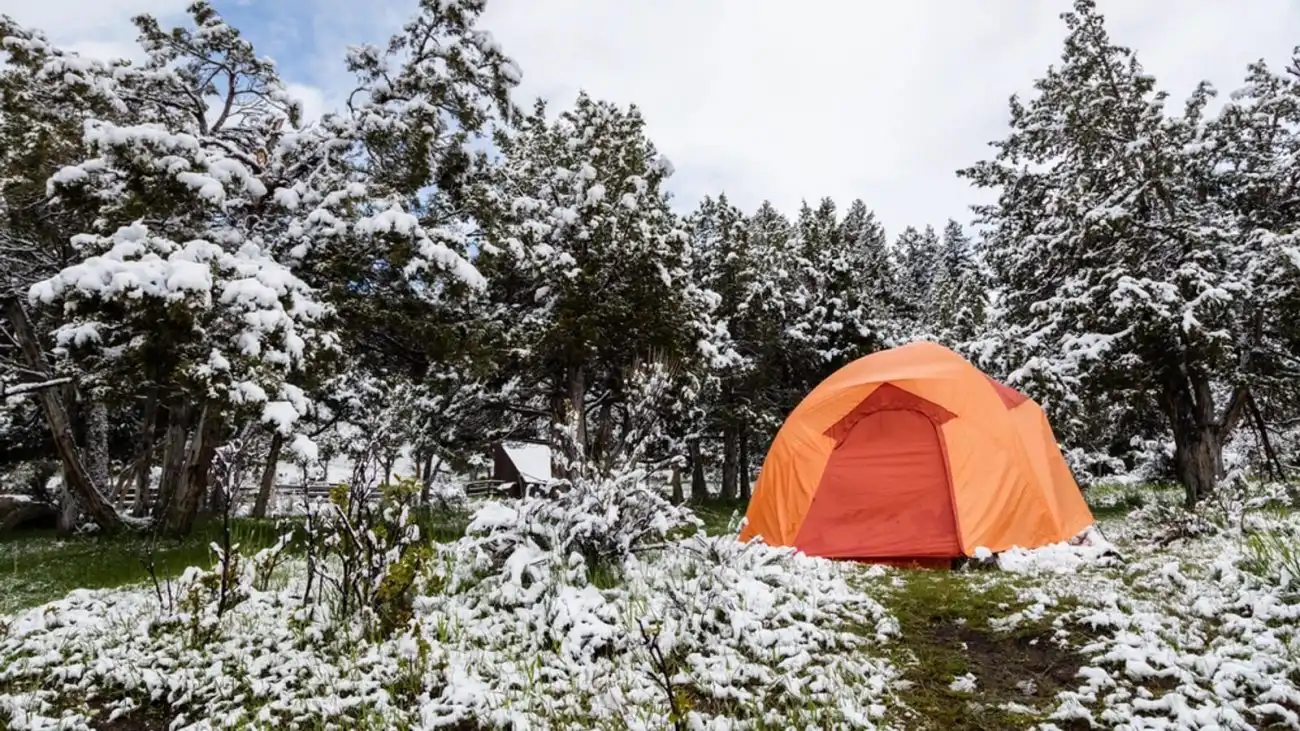
Quick answer
- Pair a bag rated for the night’s low (use the Comfort rating if you sleep cold) with pads that add up to about R-5 or more.
- Canister stoves can lose power in freezing weather. Keep the canister warm, or bring a liquid-fuel (white gas) stove for deep cold.
- Dress in layers (base, insulation, shell), skip cotton, and protect your water and filter from freezing.
- Check the weather forecast and, in snowy mountain terrain, the avalanche forecast before you go.
Winter camping can be quiet and beautiful, but it leaves less room for mistakes. Staying warm and safe mostly comes down to a sleep system that fits the conditions, a stove that works in the cold, and clothing you can adjust as you go.
This guide explains each one, then ends with a checklist you can print. If you are new to cold-weather trips, camp close to your car so you can head home easily if something isn’t working, and consider a winter skills course or a guided trip before you go farther out. You can find tents, sleeping bags, stoves and more in our camping and hiking department.
Before you pack: weather, avalanche terrain and your plan
Check the forecast for the exact area where you will camp, not just the nearest town, and note the overnight low, wind and expected snow.
If your route crosses or camps below steep, snowy slopes, check the avalanche forecast for that zone. Avalanche.org lists the US avalanche forecast centers. Avalanche terrain calls for training, rescue gear and partners who know how to use it. If you don’t have those, choose a route and campsite well away from avalanche slopes.
Winter days are short, so plan to set up camp well before sunset. Leave a trip plan with someone at home that says where you are going and when you expect to be back.
Your sleep system: bag ratings and pad R-value
Your bag and pad work as a team. A warm bag on a thin pad can still leave you cold, because the ground pulls heat from your body all night.
Sleeping bag temperature ratings, simply explained
Many bags are tested to ISO 23537, which replaced the older EN 13537 standard in 2016, so labels often say “EN/ISO.” You will usually see these numbers:
- Comfort: the temperature at which a typical person who sleeps cold should stay comfortable in a relaxed position. The standard bases this number on an average woman.
- Limit (or Lower Limit): the lowest temperature at which a typical warm sleeper, curled up, should stay just warm enough. The standard bases this number on an average man.
- Extreme: a survival-only number. It is not a temperature to plan a night’s sleep around.
On many bags, the number in the product name is close to the Limit rating, so check which rating you are reading. If you tend to sleep cold, plan around the Comfort rating. In the lab test, a heated dummy wears a base layer and a head covering and lies on an insulated pad, so your real-world warmth also depends on your own pad and clothes.
Sleeping pad R-value and why it matters in winter
R-value measures how well a pad stops your body heat from flowing into the ground. Higher numbers insulate more. Since 2020, many brands rate pads with the same test, ASTM F3340-18, which makes pads easier to compare.
Advice varies a little from source to source, but a common rule of thumb is R-1 to R-3 for summer, R-3 to R-5 for three-season use, and R-5 or more for winter camping. R-values add together when you stack pads. For example, a closed-cell foam pad rated R-2 under an inflatable pad rated R-3.5 gives you about R-5.5. The foam pad also protects the air pad from punctures and still gives some insulation if the air pad goes flat.
| Sleep system piece | What the number tells you | Winter tip |
|---|---|---|
| Bag Comfort rating | Comfortable temperature for a typical cold sleeper | Use it if you usually sleep cold |
| Bag Limit rating | Just-warm-enough temperature for a typical warm sleeper | Often close to the number in the product name |
| Pad R-value | How well the pad blocks cold from the ground | Aim for about R-5 or more in total |
| Stacked pads | R-values add together | Foam pad under an inflatable pad |
A few habits help too: change into dry base layers and socks before bed, wear a warm hat, and eat a snack before you turn in. Browse bags, pads and liners in our sleeping gear section.
Stoves in the cold: canister vs. liquid fuel
Melting snow for water takes far more fuel and time than heating liquid water, so pack more fuel than you would in summer.
Canister stoves run on pressurized gas, usually isobutane and propane, sometimes with butane. As the canister gets cold, pressure drops and the flame weakens. Each gas stops vaporizing well below a certain temperature: about 31°F for butane, about 11°F for isobutane and about -44°F for propane. In the cold, the propane in a mixed canister tends to burn off faster, so a partly used canister can struggle even with fuel left inside.
To help a canister stove in cold weather:
- Keep the canister in your jacket or sleeping bag (in a bag) until you are ready to cook.
- Set the canister on a piece of foam instead of directly on snow.
- Choose a fuel blend made for colder conditions, and bring a spare canister.
Liquid-fuel stoves burn white gas from a refillable bottle that you pressurize with a hand pump, so they generally handle deep cold better than canister stoves. They take more practice, since most need priming before they light, plus occasional cleaning. You can compare stoves, fuel and cookware in our camp kitchen section.
Safety first: camp stoves give off carbon monoxide, which you can’t see or smell, and they are a fire risk. Don’t cook inside your tent. Cook outside with plenty of fresh air around the stove, and follow your stove maker’s instructions.
The layering system for winter camp
Layering lets you add warmth when you stop and shed it when you move, so you don’t soak your clothes in sweat. Most systems use three layers:
- Base layer: a snug top and bottom that moves sweat away from your skin. Merino wool and synthetics such as polyester are common choices. Skip cotton, which soaks up water and dries slowly.
- Mid layer: insulation, such as a fleece or a light puffy jacket, that traps body heat.
- Outer layer: a shell that blocks wind, snow and rain.
In camp, when you stop moving and cool down fast, add a thick insulated jacket and insulated pants. Bring a warm hat, a neck gaiter, thin liner gloves for tasks and mittens for warmth, plus a pair of dry socks kept just for sleeping.
A common mistake is sweating on the way in. Take off a layer before you overheat, and put it back on as soon as you stop. Winter gear is bulky, so make sure your pack has room for it. Our backpacks section has options in a range of sizes.
Keep your water from freezing
A few simple tricks help keep your water liquid:
- Use bottles, not hydration bladders. Drinking tubes freeze easily and cut off your water.
- Store bottles upside down. Ice forms at the surface first, so a flipped bottle freezes at the bottom instead of at the lid.
- Insulate them. An insulated sleeve, or spare clothing wrapped around the bottle, slows freezing during the day.
- Bring them to bed. Fill your bottles before bed and keep them in your sleeping bag, sealed in a bag in case of leaks. If you use hot water, pick a bottle made for hot liquids with a tight lid.
- Protect your filter. Many squeeze filters use hollow fibers that can be damaged if water inside them freezes, and you can’t tell by looking. Keep the filter in an inside pocket by day and in your sleeping bag at night. If you think it froze, follow the maker’s advice, which may be to replace it.
Your printable winter camping checklist
Adjust this list for your trip and the forecast.
Shelter and sleep
- Winter-ready tent (four-season if you expect strong wind or heavy snow)
- Snow stakes or other anchors, plus a small shovel
- Sleeping bag rated for the expected low
- Inflatable pad plus foam pad (about R-5 or more total)
- Dry sleep clothes
Kitchen and water
- Stove suited to the temperatures, plus extra fuel
- Lighter and backup matches
- Pot with lid, insulated mug, spoon
- Bottles with insulated sleeves
- Filter kept warm, plus backup treatment
- High-calorie food and hot drinks
Clothing
- Base layer top and bottom
- Fleece or light puffy mid layer
- Insulated camp jacket and pants
- Shell jacket and pants
- Warm hat and neck gaiter
- Liner gloves and mittens
- Wool or synthetic socks, plus a sleeping pair
- Insulated boots and gaiters
- Sunglasses or goggles
Safety and navigation
- Weather forecast and, if relevant, avalanche forecast checked
- Avalanche rescue gear and training if you will be in avalanche terrain
- Map, compass and GPS or offline phone maps
- Headlamp and spare batteries in an inside pocket
- First-aid kit, sunscreen and repair kit
- Emergency shelter
- Trip plan left with someone at home
Round out your kit with our tents, and check our health and safety collection. Start with short, easy trips, learn how your gear performs, and turn back when conditions change.
Frequently asked questions
Can I use my three-season sleeping bag for winter camping?
Why does my canister stove sputter on cold mornings?
What R-value do I need to sleep on snow?
Should I use my camp stove to warm up my tent?
 Outdoor & SnowHow to Pack for a Ski or Snowboard Trip: Bags and ChecklistWhat to check, what to carry on, and which bags make bulky winter gear easier to haul, plus a full checklist for…
 Outdoor & SnowSki and Snowboard Gear Checklist for the New SeasonA pre-season checklist for skiers and snowboarders: tune-ups, binding checks, helmet and goggle advice, layering, and what beginners should rent before buying.
 Outdoor & SnowRoof Box vs. Hitch Rack: How to Carry Bikes, Skis and CargoRoof boxes, hitch racks, cargo carriers and truck-bed racks each trade off fuel use, rear access, clearance and load limits. Here's how…