
When to Replace Tires: Tread Depth, Age and Warning Signs
Tread depth, age and damage all decide when a tire is done. Here's how to check each one with a coin, the sidewall date code and a quick visual inspection.
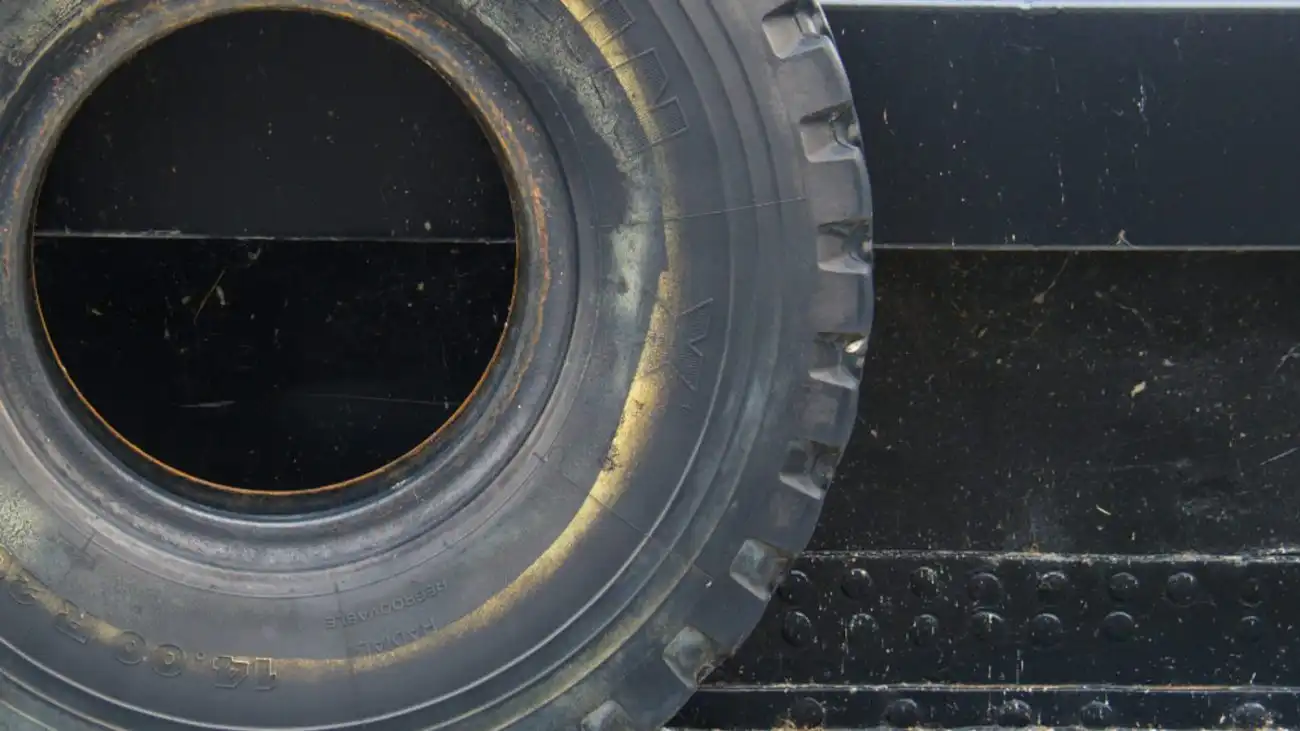
- Tread: 2/32 inch is the legal minimum in most states, but many tire professionals suggest replacing at about 4/32 inch if you often drive in rain, and snow calls for even more tread.
- Age: Read the four-digit date code on the sidewall. Some vehicle and tire makers recommend replacing tires 6 to 10 years after they were made, even with tread left.
- Damage: A sidewall bulge, cut or crack, or any exposed cords, means the tire should come off no matter how much tread remains.
- Pairs: If you replace only two, industry guidance puts the new pair on the rear axle. Some AWD vehicles need all four replaced together.
Tires rarely fail all at once. They lose a little tread with every mile, the rubber slowly ages, and small bits of damage add up. The hard part is knowing when “still has some tread” turns into “time for new ones.” This guide covers the three things that decide it: how much tread is left, how old the tire is, and whether it shows damage or uneven wear.
Every vehicle is different. Your owner’s manual and the tire placard on the driver’s door jamb are the final word on size, load and pressure, and a certified tire shop can inspect anything you’re unsure about.
Tread depth: the legal minimum vs. a safer point to replace
In the US, tread depth is measured in 32nds of an inch. Most states set the legal minimum at 2/32 inch, and the U.S. Department of Transportation recommends replacing tires once they reach that point. Tires also have small raised bars molded across the bottom of the grooves, called tread-wear indicators, that sit at 2/32 inch. When the tread around them wears down flush with those bars, the tire is done.
The legal line isn’t the same as the ideal line, though. The grooves channel water out from under the tire, and as they get shallower the tire has a harder time staying in contact with a wet road. That’s why many tire professionals treat 4/32 inch as the point to replace tires if you regularly drive in rain. Snow asks even more of the tread, because the grooves need room to pack in snow and release it as the tire rolls. Winter tire maker Nokian, for example, advises against driving on winter tires with less than about 5/32 to 6/32 inch of tread.
The penny and quarter tests
You can check depth with loose change. Put a penny into a main groove with Lincoln’s head upside down and facing you. If you can see the top of his head, the tread is at or below 2/32 inch and the tire needs replacing now. Repeat with a quarter and Washington’s head. If the tread covers the top of his head, you have at least 4/32 inch. If you can see the top of his head, start planning for new tires.
Check several spots on each tire, including the inner and outer grooves, because tires don’t always wear evenly.
| Tread depth | Quick check | What it means |
|---|---|---|
| 6/32 inch or more | Tread sits well above the wear bars | Good depth for rain; about the least some winter tire makers suggest for snow |
| 4/32 to 5/32 inch | Quarter test: tread reaches or just covers the top of Washington’s head | Still legal; plan to replace, especially before winter or a rainy season |
| Below 4/32 inch | Quarter test: top of Washington’s head is visible | Wet grip is reduced; replace soon if you drive in rain |
| 2/32 inch or less | Penny test: top of Lincoln’s head is visible; tread is flush with the wear bars | Replace now; at or below the legal minimum in most states |
How old is too old? Reading the date code
Rubber ages even when a tire isn’t driven much. NHTSA notes that tires age whether or not they are used, and that heat and sunlight can speed the process. That matters most for low-mileage cars, spares, and trailers or RVs that sit for long stretches.
To find a tire’s age, look for the letters “DOT” on the sidewall, followed by a string of letters and numbers. The last four digits are the date code: the first two are the week and the last two are the year. A code ending in 2223 means the tire was made in the 22nd week of 2023. The complete code is sometimes printed on only one side, so check the inner sidewall if you can’t find it on the outside.
There is no single age limit, and makers word their guidance differently. NHTSA says some vehicle and tire manufacturers recommend replacing tires that are six to 10 years old, regardless of tread. Michelin, for example, recommends a yearly inspection by a tire professional once a tire has been in service for five years, and replacement 10 years after the date of manufacture no matter how it looks. Some automakers list a shorter limit in the owner’s manual. The U.S. Tire Manufacturers Association points out that storage and driving conditions vary so much that calendar age alone can’t predict a tire’s life, which is why regular inspection matters. If your manual and your tire maker give different numbers, the more conservative one is the safer choice.
Uneven wear: what the pattern is telling you
When one part of the tread wears faster than the rest, the pattern usually points to a cause, and fixing it protects your next set.
- Worn in the center: often a sign of running pressure higher than the vehicle’s recommendation.
- Worn on both outer edges: usually points to underinflation.
- Worn on one edge only: commonly an alignment problem, such as camber that is out of spec.
- Feathered tread (each block smooth on one side and sharp on the other): often a toe alignment issue.
- Cupping or scalloped dips: can point to worn shocks or struts, or a tire and wheel that are out of balance.
If a tire has worn unevenly, have the cause fixed before its replacement goes on. Setting pressure to the number on the door-jamb placard (not the maximum printed on the sidewall), checking it monthly when the tires are cold, and rotating on the schedule in your owner’s manual all help tires wear evenly.
Damage that means replace, not repair
Some problems make a tire unsafe no matter how much tread is left. Replace the tire, or have a professional look at it right away, if you notice:
- A bulge or bubble on the sidewall, which suggests damage inside the tire’s structure.
- Cuts, gouges or punctures in the sidewall or shoulder.
- Exposed steel belts or fabric anywhere on the tire.
- Deep cracks in the sidewall or between the tread blocks, a common sign of aging.
- A vibration, pull or thumping sound that starts suddenly, especially after hitting a pothole or curb.
Punctures are a separate question. The U.S. Tire Manufacturers Association says a repair should be considered only when the damage is in the tread area and no larger than 1/4 inch across. The tire should come off the wheel so the inside can be inspected, and the repair needs both a plug to fill the hole and a patch to seal the inner liner. Damage in the sidewall or shoulder can’t be repaired, so the tire has to be replaced.
Two tires or four?
Replacing all four at once keeps grip, handling and wear even, and the Tire Industry Association calls it the best practice. If you replace only two, both the Tire Industry Association and the U.S. Tire Manufacturers Association recommend putting the new tires on the rear axle. With worn tires on the back, the rear can lose grip first on a wet road, which makes a loss of control in a turn more likely.
All-wheel-drive and four-wheel-drive vehicles need extra care. The drivetrain expects all four tires to turn at nearly the same rate, and a big difference in tread depth means a difference in how far each tire travels per turn. Some vehicle makers require all four tires to be replaced together, while others allow a small difference in tread depth. Check your owner’s manual, and ask a tire shop to measure your current tread. Some shops can also shave a new tire down to match the other three.
Choosing your replacement tires
Start with the size, load index and speed rating listed on your door-jamb placard or in the owner’s manual. The U.S. Tire Manufacturers Association advises that replacement tires match what the vehicle or tire maker recommends and never go smaller in size or load capacity. From there, pick the type that suits how and where you drive:
- All-season tires are the everyday choice for many drivers in places with mild winters.
- Highway and touring tires are designed with ride comfort and a quiet cabin in mind.
- Winter tires use rubber that stays softer in the cold and tread designed for snow and ice. If you’re deciding between the two seasonal options, our guide to winter tires vs. all-season tires compares them side by side.
- For sedans, coupes and hatchbacks, start with passenger car tires. For crossovers and SUVs, browse SUV and CUV tires.
Orders to the contiguous US (the lower 48 states plus Washington, DC) ship free. You can also send tires straight to a local installer: call the shop first, then enter the shop’s address as the shipping address and the shop’s name in the Company name field. Our shipping policy has the full details.
Frequently asked questions
How can I tell how old my tires are?
Do spare tires and stored tires age too?
Is a tread depth gauge better than the coin test?
Should I replace a tire that slowly loses air?
 Tire GuidesWinter Tires for Trucks and SUVs: What to Look ForLT or P-metric, studless or studdable, winter tire or 3PMSF all-terrain: how to pick winter tires that carry your truck's load and…
 Tire GuidesDo You Need Winter Tires If You Have AWD or 4WD?AWD and 4WD help you pull away in snow, but they do not help you stop or turn. Here is when winter…
 Tire GuidesCold Weather and Tire Pressure: Why It Drops, What to DoCold air means lower tire pressure. Here is why it happens, why the TPMS light shows up on chilly mornings, and a…